
Compare epoxy flakes and solid epoxy coatings to determine which flooring system offers better durability, aesthetics, and performance.
A Detailed Guide to Performance, Appearance, and Long-Term Value
Which Epoxy Flooring Option Delivers Better Results for Your Needs?
Find the Best Flooring Option for Garages, Commercial, and Industrial Use
Introduction:
Epoxy flooring has become one of the most trusted solutions for protecting and enhancing concrete surfaces. However, many property owners and contractors face a common question when planning a flooring upgrade:
Should you choose solid epoxy coating or epoxy flakes?
Both options offer excellent durability compared to traditional floor finishes. However, they differ significantly in terms of appearance, functionality, maintenance, and long-term performance.
Understanding these differences helps determine which flooring system is best suited for specific applications such as garages, warehouses, commercial spaces, or residential interiors.
What Is Solid Epoxy Coating?
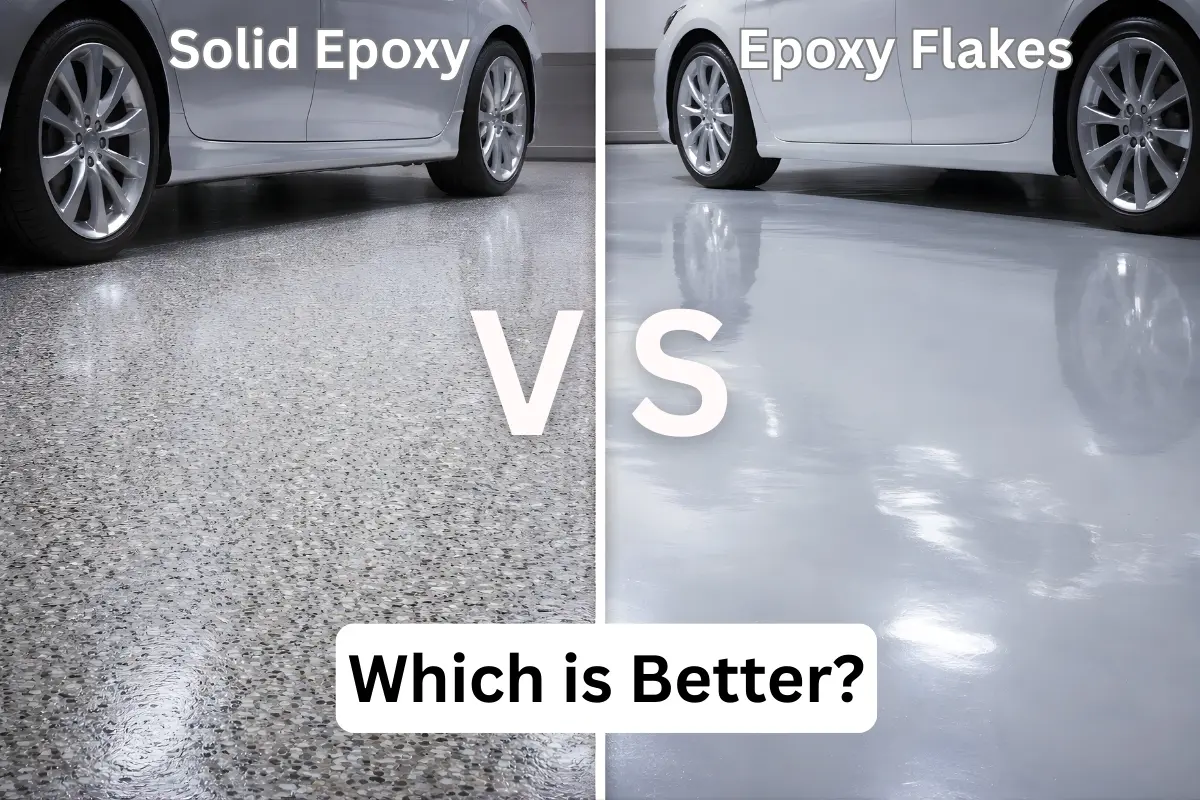
Solid epoxy coating is a seamless flooring system created by applying multiple layers of epoxy resin directly onto concrete surfaces.
This coating forms a smooth, glossy finish that protects the concrete underneath from damage, stains, and moisture.This coating forms a smooth, glossy finish that protects the concrete underneath from damage, stains, and moisture.
Common characteristics include:
- Smooth, uniform surface
- High gloss finish
- Strong chemical resistance
- Simple installation process
Solid epoxy coatings are widely used in industrial facilities, laboratories, and manufacturing environments where clean surfaces and chemical resistance are essential.
What Are Epoxy Flake Systems?
Epoxy flake flooring builds upon the base epoxy coating by adding decorative flakes during installation.
After applying the epoxy base layer, installers broadcast polymer flakes across the wet surface. Once the flakes settle, a clear protective topcoat seals them into place.
This system creates a textured surface with decorative color patterns and improved slip resistance.
Appearance and Design Flexibility
One of the biggest differences between these two systems lies in their visual appearance.
Solid epoxy coatings provide a clean, uniform look. While this can appear sleek and modern, the single-color finish sometimes highlights imperfections in the concrete surface.
Epoxy flakes offer a more dynamic appearance. Because the flakes introduce multiple colors and textures, they naturally hide small cracks, stains, or surface irregularities.
Benefits of epoxy flakes include:
- Decorative patterns and color blends
- Greater depth and texture
- Ability to match design themes
- Improved visual interest
For spaces where appearance matters as much as durability, flake systems are often preferred.
Slip Resistance and Safety
Safety is another key factor when choosing between these flooring systems.
Solid epoxy floors are smooth and glossy. While this creates a polished appearance, it can become slippery when wet or exposed to oils.
Epoxy flakes naturally improve slip resistance. The textured surface created by embedded flakes adds traction, making floors safer in environments where moisture or spills are common.
This makes epoxy flakes especially suitable for:
Garages
Workshops
Commercial kitchens
Industrial workspaces
Durability and Surface Protection
Both flooring systems provide excellent durability compared to uncoated concrete.
However, epoxy flake systems offer additional reinforcement due to the layered structure of the coating.
The flakes add thickness and help distribute stress across the surface. This improves resistance to impacts, scratches, and wear from heavy use.
Solid epoxy coatings remain durable but may show scratches or surface wear more visibly over time.
Maintenance Requirements
Maintenance is relatively simple for both flooring options.
Solid epoxy floors are easy to clean because of their smooth surface. However, scratches or stains may become more noticeable due to the uniform color.
Epoxy flakes are better at hiding dirt, minor damage, and surface wear. The multi-color pattern masks imperfections, allowing floors to maintain a clean appearance even in busy environments.
Routine maintenance usually involves:
- Sweeping debris
- Occasional mopping
- Avoiding abrasive cleaning tools
Choosing the Right System for Your Space
The choice between epoxy flakes and solid epoxy coating ultimately depends on the purpose of the space.
Solid epoxy coatings work well in controlled environments where a clean, uniform appearance is preferred.
Epoxy flake systems are ideal for high-traffic areas where durability, safety, and aesthetics are equally important.
Garages, commercial spaces, and decorative flooring projects often benefit more from flake systems because they combine functionality with design flexibility.
Conclusion:
Both epoxy flakes and solid epoxy coatings offer reliable protection for concrete floors. However, epoxy flake systems provide several additional advantages including improved slip resistance, enhanced aesthetics, and greater ability to hide surface imperfections.
For spaces that require both performance and visual appeal, epoxy flakes remain one of the most versatile and practical flooring solutions available today.

 and then Add to Home Screen.
