


Epoxy is a fascinating and highly versatile material that has transformed industries from construction to art. Understanding its core components and applications is key to appreciating its widespread use.
What is Epoxy?
At its most basic, epoxy refers to a class of reactive prepolymers and polymers that contain epoxide groups. More commonly, when we talk about epoxy in practical terms, we're referring to a two-part system:
- Epoxy Resin (Part A): This is the base component, a reactive chemical that contains the epoxide groups.
- Hardener or Curing Agent (Part B): This component reacts with the resin, initiating a chemical process called curing.
When these two parts are mixed in specific ratios, a chemical reaction occurs, causing the liquid mixture to transform into a rigid, durable solid polymer. This process, known as curing, can take minutes to days, depending on the specific epoxy formulation and environmental conditions like temperature.
The characteristics of the final cured epoxy (e.g., whether it's rigid or flexible, its resistance to heat or chemicals) are determined by the specific types of resins, hardeners, and any additives used in the formulation.
Types of Epoxy
While the fundamental two-part system remains, epoxy resins are formulated in various ways to achieve different properties and suit diverse applications. Here are some common types:
- Bisphenol Epoxy Resins (e.g., DGEBA): These are among the oldest and most widely used types. They offer excellent adhesive properties, chemical resistance, and are commonly found in coatings, adhesives, and composite materials.
- Novolac Epoxy Resins: Known for their high chemical resistance, especially to solvents and acids, and high-temperature performance. They are often used in demanding industrial coatings and chemical containment applications.
- Aliphatic Epoxy Resins: These types are prized for their excellent UV resistance and color stability, making them suitable for outdoor applications where yellowing is a concern.
- Glycidylamine Epoxy Resins: Offer high functionality and are often used in advanced composites and aerospace applications due to their high strength and heat resistance.
- Flexible Epoxy Resins: Modified to be more elastic and less brittle once cured. They are often blended with other epoxies to improve toughness and impact resistance.
- Water-Based Epoxy Coatings: These formulations use water as a carrier, reducing VOCs (volatile organic compounds) and making them more environmentally friendly and easier to clean up. They are commonly used for interior walls, ceilings, and light-traffic floors.
- Metallic Epoxy: These systems incorporate metallic pigments into the resin to create unique, shimmering, marbled, or pearlescent visual effects, popular for decorative floors and countertops.
- Self-Leveling Epoxy: Designed to flow smoothly and evenly across a surface, naturally filling in minor imperfections to create a seamless, uniform finish. Ideal for concrete floors.
- Epoxy Mortar: The strongest type of epoxy application, typically mixed with sand or aggregates to create a highly durable and impact-resistant floor. Used in heavy industrial settings.
- Antistatic Epoxy: Formulated with conductive additives to dissipate static electricity, making them ideal for environments with sensitive electronic equipment, like laboratories or manufacturing facilities.
- Art & Craft Epoxy Resins: Specifically designed for creative projects, often with longer working times, high clarity, and UV resistance to prevent yellowing in artwork, jewelry, or river tables.
What are Epoxy Chips? (Also known as Epoxy Flakes or Color Chips)
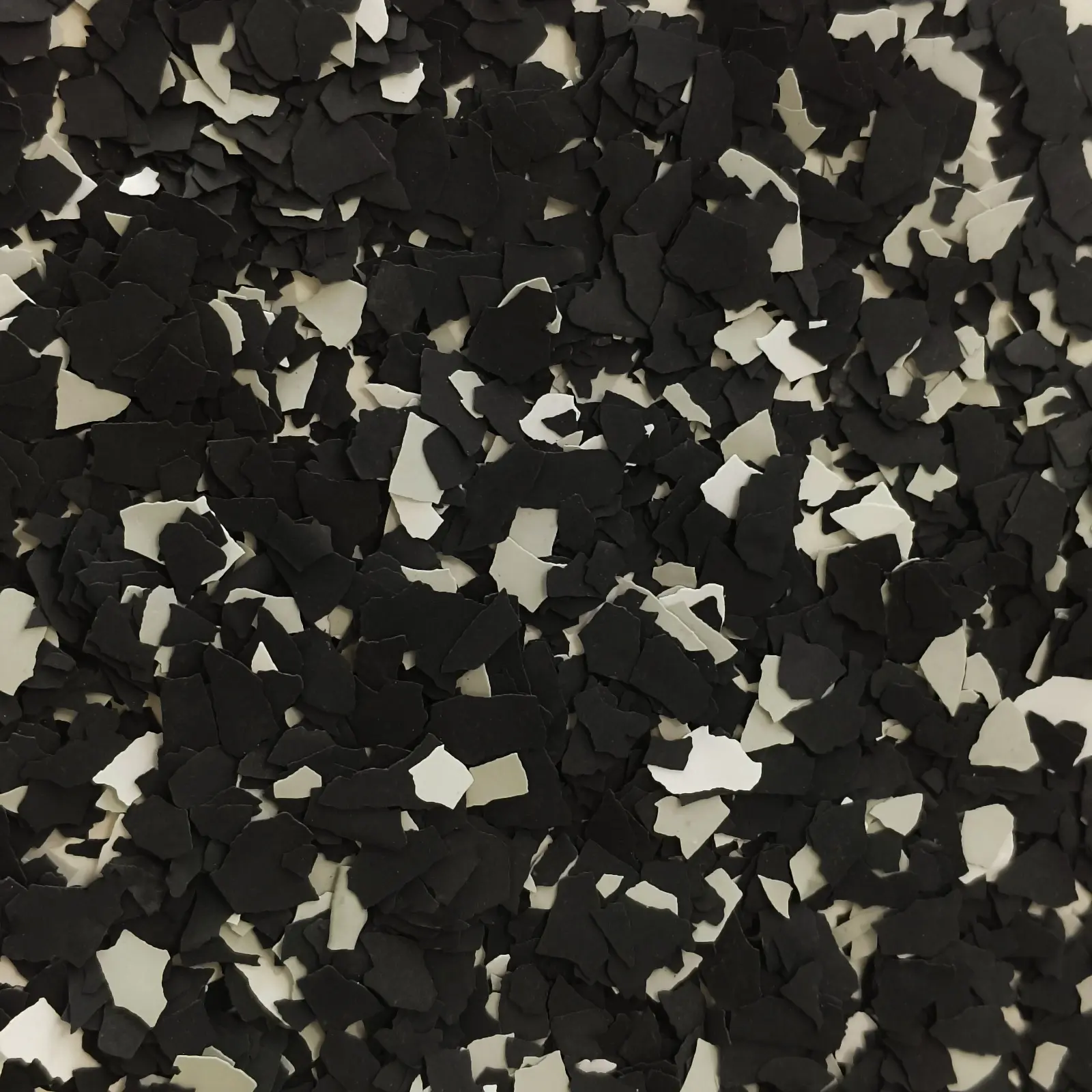
Epoxy chips, also commonly referred to as epoxy flakes or color chips, are small, decorative flakes of polymer material (often vinyl) that are broadcast or sprinkled into a wet epoxy coating.
Their primary purposes are:
- Aesthetics/Decoration: They come in an enormous variety of colors, sizes, and custom blends, allowing for endless design possibilities. They can mimic the look of granite, terrazzo, or create unique, multi-hued patterns.
- Hiding Imperfections: The random patterns and textures created by the chips help to camouflage minor imperfections, cracks, or dirt on the substrate, making the floor appear cleaner and more uniform.
- Slip Resistance: When properly applied and sealed with a clear topcoat, the texture of the chips can provide a degree of slip resistance, making the surface safer, especially in wet conditions.
- Durability: While the chips themselves aren't the primary structural component, they are embedded within the robust epoxy system, contributing to the overall integrity and wear resistance of the floor.
They are most commonly used in garage floors, basements, commercial showrooms, and other areas where a decorative and durable floor is desired.
Why Choose Epoxy?
Epoxy has become a go-to material for a multitude of applications due to its compelling combination of properties:
- Exceptional Durability and Strength: Once cured, epoxy creates an incredibly hard, tough surface that can withstand heavy traffic, impacts, abrasions, and the weight of vehicles or heavy machinery. This makes it ideal for garages, warehouses, and industrial floors.
- Chemical and Stain Resistance: Epoxy is highly resistant to a wide range of chemicals, including oils, grease, gasoline, cleaning agents, and acids. This makes it easy to clean up spills without permanent staining or damage, crucial for kitchens, laboratories, and auto shops.
- Aesthetic Versatility: Available in a vast array of colors, finishes (gloss, satin, matte), and with the option to incorporate decorative flakes, metallic pigments, or even custom logos, epoxy can be tailored to fit any design aesthetic, from sleek modern to industrial chic.
- Easy to Clean and Maintain: Its seamless, non-porous surface prevents dirt, dust, and liquids from penetrating, making cleaning incredibly simple. A broom, mop, or even a pressure washer (for industrial settings) is often all that's needed.
- Cost-Effectiveness (Long-Term): While the initial installation cost might vary, the longevity and low maintenance requirements of epoxy flooring often make it a more cost-effective solution over its lifespan compared to other flooring options that require frequent repairs or replacement.
- Enhanced Safety: Non-slip additives or the texture provided by epoxy chips can be incorporated to create slip-resistant surfaces, significantly reducing the risk of falls in wet or high-traffic areas.
- Moisture and Water Resistance: When properly installed, epoxy creates a waterproof barrier, protecting the underlying substrate from moisture damage, making it excellent for basements, garages, and pool decks.
- Improved Light Reflectivity: High-gloss epoxy finishes can significantly brighten a space by reflecting light, which can reduce the need for additional lighting and improve visibility in areas like garages or warehouses.
- Versatility: Epoxy can be applied to a wide variety of surfaces, including concrete, wood, metal, and even existing tiles, making it adaptable for countless residential, commercial, and industrial projects.
In essence, epoxy offers a powerful combination of strength, beauty, and practicality, making it an excellent choice for anyone seeking a long-lasting, easy-to-maintain, and customizable surface.

 and then Add to Home Screen.
